

Get to Know Dr. Bernadette Holdener: HA 2019 Innovator Award Grantee
In our first installment of our Meet the Innovator Awardees Blog Series, we interview Dr. Bernadette Holdener, one of four scientists who received a Hydrocephalus Association 2019 Innovator Award.

Four Scientists Awarded HA Grants to Deepen Our Understanding about Hydrocephalus
There is a lot we do not know about how hydrocephalus develops and how to best treat the condition across our many communities. Our 2019 Innovator Award recipients are looking to change that.
St. Louis Event Celebrates 10th Anniversary of HA’s Research Initiative
Families and researchers from across the country came together on Nov. 3 to celebrate the 10th Anniversary of HA’s Research Initiative. The event, held in St. Louis, MO, highlighted the successes of our research investments and honored the trailblazers who started it all.
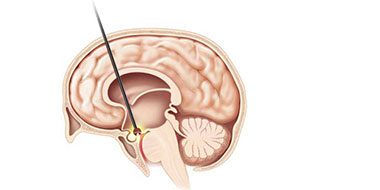
ETV-CPC for the treatment of infants with hydrocephalus: Predicting Success
The Hydrocephalus Clinical Research Network (HCRN) conducted a study to determine which babies under two years old with hydrocephalus have the best chance of success with an ETV-CPC procedure. In her blog, Dr. Jenna Koschnitzky, National Director of Research Programs, explains why the findings of this study are important when determining if a baby under two years old should receive a shunt or undergo the ETV-CPC procedure.
New Clinical Trial Aims to Determine Effectiveness of Shunting for iNPH Patients
Patients diagnosed with idiopathic Normal Pressure Hydrocephalus (iNPH) are typically treated by having a shunt placed surgically. A new clinical trial will determine whether or not shunts are an effective form of treatment for iNPH patients.
You spoke! We wrote!
In October 2017, 82 individuals responded to a question we posed on social media about how hydrocephalus impacts their daily life. Researchers at the University of Pittsburgh Medical Center analyzed their responses in a new paper.
Three Scientists Awarded HA Grants for Their Bold and Innovative Work
What if you could prevent or stop the development of hydrocephalus after a brain bleed or develop a shunt that doesn’t get clogged? That’s what the 2018 HA Innovator Award grantees are hoping to do through their research projects.
Does the size of an Endoscopic Third Ventriculostomy (ETV) hole increase over time?
This study is the first to evaluate the size of the ETV hole using MR imaging over a period of time. This research is important because it shows us how useful MR imaging can be to neurosurgeons who want to evaluate an ETV.
HA-Funded Researchers Awarded $2.3 Million Grant from the Department of Defense
HA-funded researchers were awarded funding through the Department of Defense (DoD) Congressionally Directed Medical Research Programs (CDMRP) to study acquired hydrocephalus, with a particular focus on hydrocephalus that develops after a brain injury.
HA-Funded Researcher Awarded $1.8M NIH Grant
The Hydrocephalus Association (HA) is funding the best and brightest. Since 2009, HA has spent $7.8 million on our research programs. Our researchers have then gone on to secure over $19 million in additional funding to continue their innovative work.
Announcing the 2018 Discovery Science Award Grantees!
The award allows these scientists to expand their research on posthemorrhagic hydrocephalus (PHH).
Hydrocephalus research presented at the international Europhysiology Conference
Alexandra Hochstetler was one of our ten Young Investigator Travel Award winners at the 2018 HACONNECT. This past weekend, she presented her work at the Europhysiology Conference held in London, United Kingdom!