Meet the 2026 Next Generation Scientists Advancing Hydrocephalus Research
The future of hydrocephalus research depends on talented scientists and clinicians choosing to dedicate their careers to understanding the condition, improving treatment, and ultimately finding a cure. The Hydrocephalus Association’s Next Generation Scientists Travel Award helps make that future possible.
Formerly known as the Young Investigator Travel Award, this program provides emerging researchers with the opportunity to attend HA CONNECT, the National Conference on Hydrocephalus, where science and lived experience come together.
For young investigators, HA CONNECT offers something that cannot always be found in a laboratory, clinic, or classroom: the opportunity to meet and learn directly from people living with hydrocephalus and their families. Award recipients can also share their research, connect with established experts in the field, and become part of a community working toward better outcomes for everyone impacted by hydrocephalus.
Meet the 2026 Award Recipients
This year’s recipients represent an exciting range of research—from understanding patient and caregiver experiences to developing new technologies and investigating potential treatments.
Olivia Thomas →
Neuropsychiatric Symptoms Associated with Ventriculoperitoneal Shunts: A Multicenter Trinetx Analysis
Olivia’s research examines neuropsychiatric symptoms associated with ventriculoperitoneal shunts using multicenter data, helping expand our understanding of the experiences and health needs of people treated for hydrocephalus.
Mary Grace Roe →
Factors Influencing Risk and Resilience in Caregivers of Children with Hydrocephalus
Mary Grace is examining the factors that contribute to risk and resilience among caregivers of children with hydrocephalus, bringing important attention to the experiences of families and those providing care.
Jessica Moser →
Headaches and Hydrocephalus: The Patient Experience
Jessica’s work focuses on an issue familiar to many people in the hydrocephalus community: headaches. Her research centers the patient experience to better understand this challenging symptom.
Jayne Crouthamel →
The Effects of Hydrocephalus on Cerebellar and Brainstem Size and the Subsequent Effects on Gait and Balance
Jayne is exploring how hydrocephalus affects the cerebellum and brainstem and how those changes may relate to gait and balance.
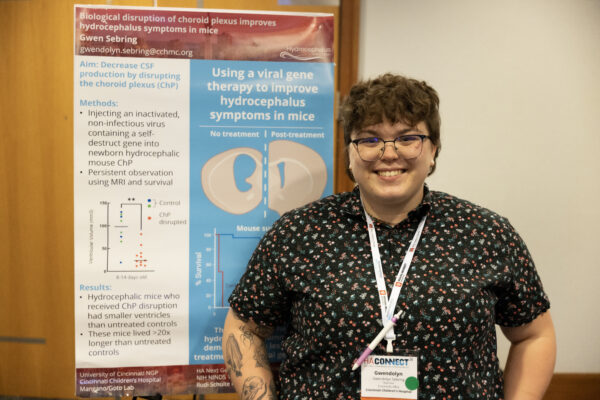
Gwendolyn Sebring →
AAV-Driven Choroid Plexus Epithelial Cell Ablation Significantly Reduces Ventricular Volume and Improves Survival in a Mouse Model of Neonatal Hydrocephalus
Gwen’s preclinical research investigates an experimental approach targeting choroid plexus epithelial cells and its potential effects on ventricular volume and survival in a mouse model of neonatal hydrocephalus.
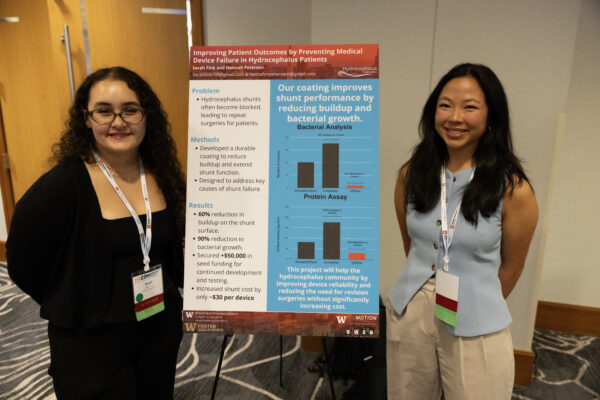
Sarah Fink & Hannah Peterson →
CSFlow: Applications of Zwitterionic Polymers to Increase the Biocompatibility and Hydrophilicity of Silicone Hydrocephalus Shunts
Sarah and Hannah are applying engineering and materials science to a longstanding challenge in hydrocephalus treatment, exploring the use of zwitterionic polymers to improve properties of silicone shunts.
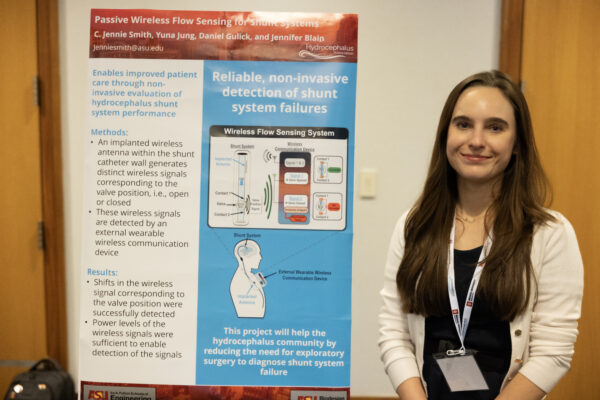
Caroline Jennie Smith →
Passive Wireless Flow Sensing for Hydrocephalus Valves
Jennie’s research explores passive wireless flow sensing technology for hydrocephalus valves, an innovative approach with potential applications in monitoring shunt function.
Anushka Acharya →
Initial Results from SCEMPI: An Early Phase Clinical Trial for Neurorepair with High Dose Melatonin and Erythropoietin for Very Preterm Infants with IVH
Connecting the Next Generation with Our Community
Together, the 2026 recipients demonstrate just how broad hydrocephalus research has become. Their work spans patient and caregiver experiences, brain function, shunt technology, biomedical engineering, and potential new therapeutic approaches.
At HA CONNECT 2026, these emerging researchers had the opportunity to share their work while connecting directly with people living with hydrocephalus, families, clinicians, and established researchers in the field. These interactions are an important part of the Next Generation Scientists Travel Award, helping researchers better understand the experiences and priorities of the community their work is intended to serve.
We were proud to have the 2026 Next Generation Scientists Travel Award recipients join us at HA CONNECT and share their research with our community. We look forward to following their work and seeing how this next generation of scientists helps move hydrocephalus research forward.