
How Cerebrospinal Fluid Works in Hydrocephalus
What is Cerebrospinal Fluid (CSF)?
Cerebrospinal fluid is a clear liquid that is found in chambers in the brain, and flows out and around the brain and spinal cord. It:
- Cushions the brain and spinal cord from injury
- Carries nutrients, oxygen, and hormones to the brain tissue
- Removes waste products and toxins from the brain
Under normal conditions, your body continuously produces and absorbs CSF, ensuring that levels remain stable each day. But when the balance between how much fluid is produced and absorbed is disrupted, it can increase pressure on the brain.
What is Hydrocephalus?
Hydrocephalus is a condition when there is an abnormal balance of CSF in the brain and spine.
How the Brain and Central Nervous System Are Protected
The brain and spinal cord make up the central nervous system (CNS). They are protected by the bones of the skull and the backbone (vertebral column), as well as the thin layers of protective tissues called the meninges. The meninges surround and safeguard the brain and spinal cord, contain the spinal fluid, and thus help absorb shocks from everyday movement or injury.
The Brain’s Ventricles: Fluid-Filled Chambers
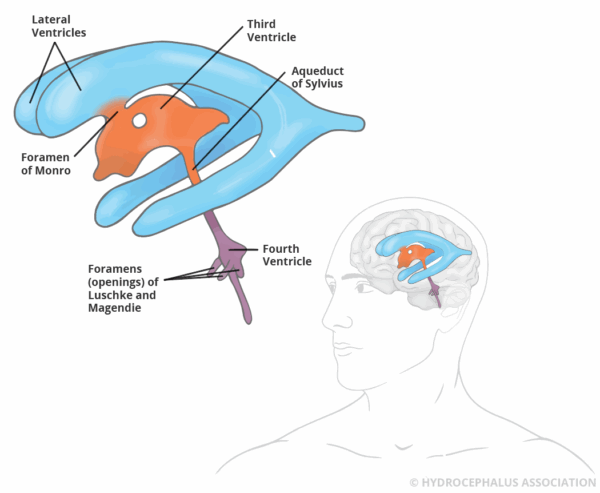 Inside the brain are the four interconnected spaces called ventricles. They can be thought of as small chambers that hold CSF. There are:
- The lateral ventricles – one on each side of the brain that drain into the third ventricle
- The third ventricle – located in the middle of the brain and drains into the fourth ventricle
- The fourth ventricle – located between the brainstem and cerebellum at the bottom of the brain.
These ventricles are connected by narrow passageways that allow CSF to circulate throughout the brain.
Your body produces about one pint or more of cerebrospinal fluid (CSF) every day—and constantly reabsorbs it to keep your brain protected and nourished.
CSF acts like a shock absorber for your brain and spinal cord, delivering nutrients, removing waste, and maintaining steady pressure inside your skull.
When this natural balance is disrupted—due to blockage, overproduction, or reduced absorption—it can lead to hydrocephalus, a condition where CSF builds up and increases brain pressure.
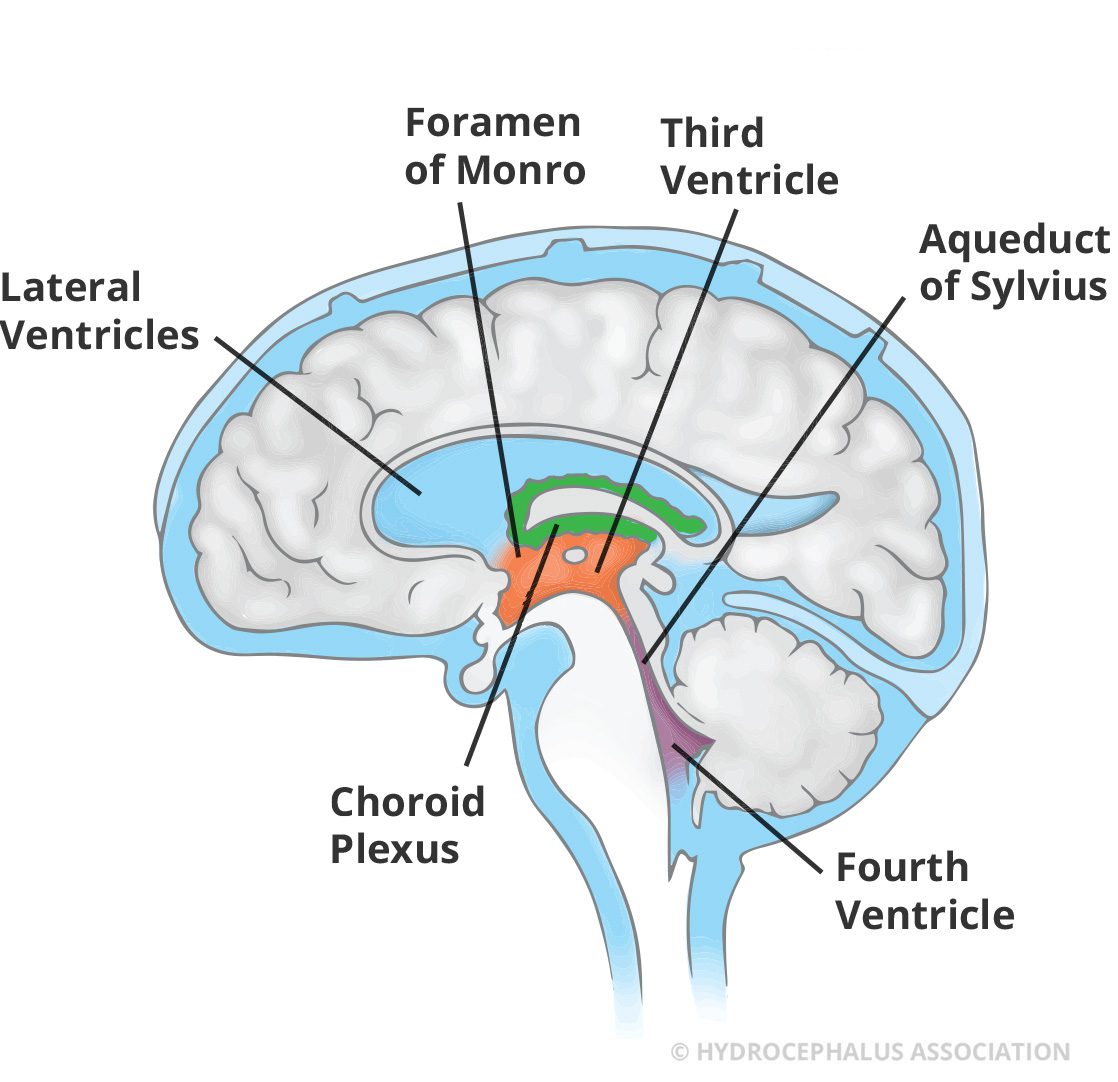
Where CSF Is Produced?
Most CSF is made by delicate clusters of tissue called the choroid plexus, found inside the ventricles, mainly the lateral and third ventricles.
In rare cases, hydrocephalus can occur when the choroid plexus produces too much CSF, such as when a choroid plexus tumor is present.
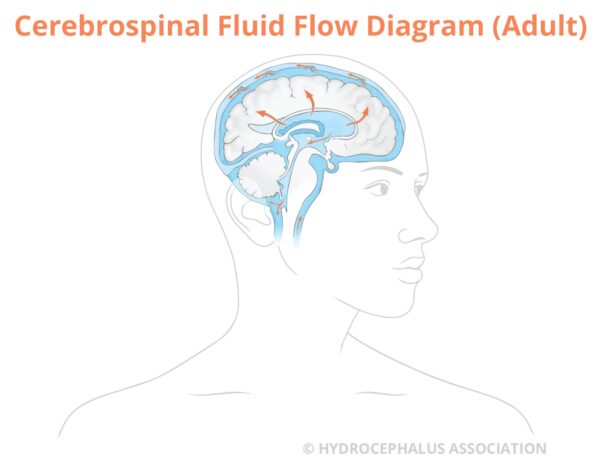 How CSF Circulates Through the Brain
The flow of CSF follows a specific path:
- From each lateral ventricles, through a small opening (Foramen of Monro) into the third ventricle,
- Down a long and narrow passageway called the aqueduct of Sylvius into the fourth ventricle, and
- Out through three small openings (foramina) at the bottom of the fourth ventricle and into the subarachnoid space, which surrounds the brain and spinal cord.
As it circulates, CSF protects and nourishes the brain before it’s absorbed back into the bloodstream.
How CSF Is Absorbed
For many years, scientists believed CSF was absorbed through tiny, specialized cell clusters called arachnoid villi near the top and midline of the brain. These villi pass CSF into a large vein, the superior sagittal sinus, where it is absorbed into the bloodstream. Once in the bloodstream, it is carried away and filtered by the kidneys and liver in the same way as other bodily fluids.
More recent research has shown that CSF is also absorbed through additional pathways, including areas near the lymphatic system. If absorption is reduced or blocked, CSF begins to build up, leading to communicating hydrocephalus.
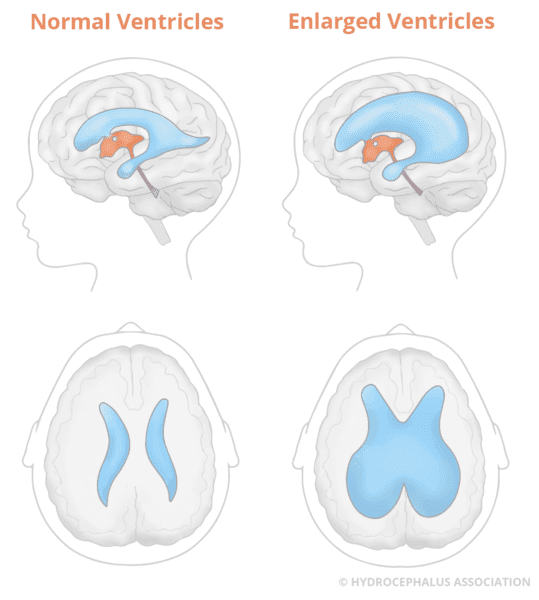 When CSF Flow Is Blocked
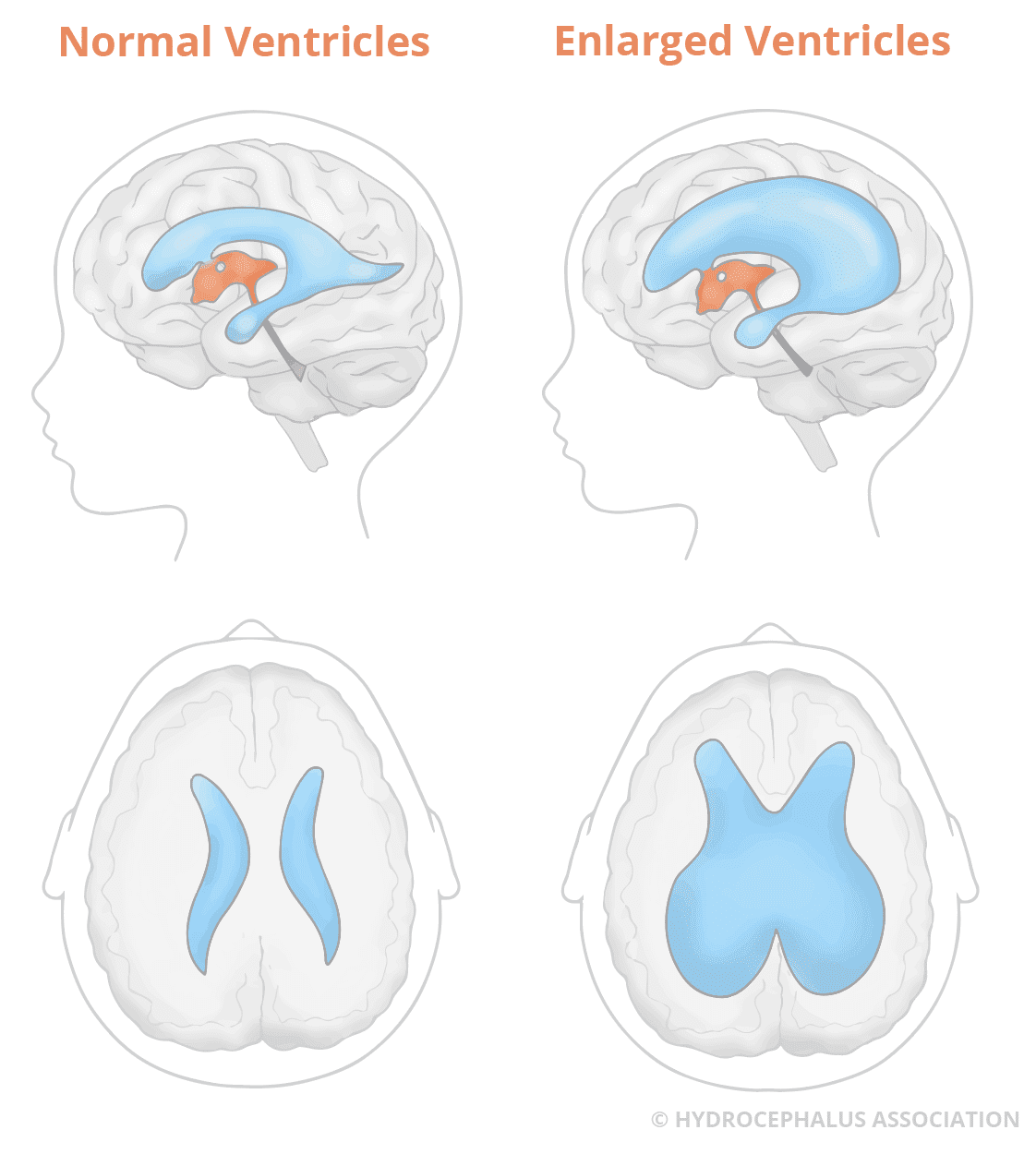
If CSF flow is blocked at any point within the ventricles, such as the aqueduct or foramina, it can lead to non-communicating hydrocephalus (also called obstructive hydrocephalus). This blockage prevents normal circulation, causing the fluid to accumulate and the ventricles to enlarge, and pressing on the brain tissue.
A Delicate Balance
A healthy brain maintains a delicate balance between how much CSF is produced and absorbed. When that balance is disrupted—by overproduction, blockage, or reduced absorption—hydrocephalus can develop, causing fluid build-up and increased pressure in the brain.
The increased pressure can cause a range of symptoms such as headaches, nausea, vision changes, difficulty walking, or developmental delays in children.
Hydrocephalus can affect people of any age and is typically treated with surgery, most often a shunt or an endoscopic third ventriculostomy (ETV), to restore normal CSF flow and relieve pressure.
Information you can trust! This article was produced by the Hydrocephalus Association, copyright 2025. We would like to thank Bruce A. Kaufman, MD for his valuable contribution and expert input.